

The Assam Archives — Civilizational Heritage of the Brahmaputra
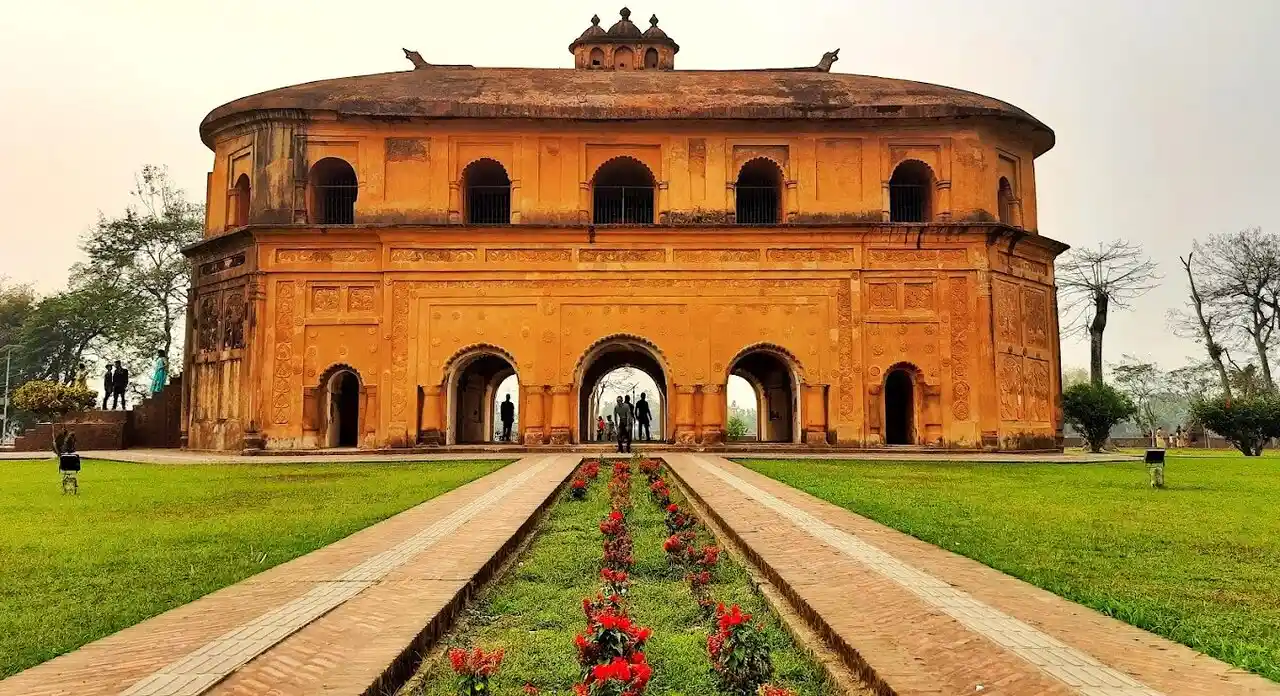
Six Centuries of Tai-Ahom Royal Sovereignty, Classical Kamarupa Stone Architecture, and Neo-Vaishnavite Sattra Lineages
The Sacred Geography of the Brahmaputra Valley
Flanked by the eastern Himalayan foothills to the north and the Patkai and Karbi hill ranges to the south, Assam is one of the most culturally diverse and historically profound regions of the Indian subcontinent. Nourished by the majestic Brahmaputra River—the only male river (Nada) in Indian sacred geography—the valley has served as a civilizational crossroads for Austroasiatic, Tibeto-Burman, Tai-Kadai, and Indo-Aryan peoples for millennia.
From the world's largest inhabited river island of Majuli to the ancient tea gardens of Upper Assam and the biodiverse grasslands of Kaziranga, Assam's landscape is inextricably woven with spiritual lore, heroic resistance chronicles, and exquisite material arts.
Deep-Time Historical Epochs & Sovereign Dynasties
1. Pragjyotisha & Classical Kamarupa
Ancient epics record Assam as Pragjyotisha—the eastern realm of astronomical study—and later Kamarupa. Under the Varman, Mlechchha, and Pala dynasties (4th to 12th centuries CE), classical rock-cut architecture, Sanskrit scholarship, and sacred temple geometry flourished across Tezpur, Guwahati, and Goalpara.
2. Six Centuries of Tai-Ahom Sovereignty (1228–1826 CE)
In 1228 CE, Chaolung Sukaphaa crossed the Patkai mountains from Southeast Asia and founded the Ahom kingdom in Upper Assam. For 600 unbroken years, the Tai-Ahom dynasty ruled the Brahmaputra valley with martial brilliance and administrative genius, successfully defeating seventeen separate Mughal imperial invasions, culminating in General Lachit Borphukan's historic naval victory at the Battle of Saraighat in 1671.
3. The Medieval Koch & Chutiya Kingdoms
Parallel kingdoms, including the Koch kingdom under King Naranarayana and General Chilarai, and the Chutiya kingdom centered at Sadiya, developed remarkable traditions of defensive architecture, bell-metal artistry, and regional diplomacy.
Living Cultural Traditions & Spiritual Lineages
In the 15th and 16th centuries, the saint-polymath Mahapurush Srimanta Sankardev led an egalitarian cultural and spiritual renaissance across Assam. Through monastic institutions known as Sattras, Sankardev developed classical Sattriya dance, Borgeet devotional hymns, Bhaona theatrical performances, and community prayer halls (Namghars) that remain the spiritual heartbeat of Assamese society today.
Assamese life follows the rhythm of three seasonal Bihu festivals: Rongali Bihu (celebrating the Assamese New Year, spring fertility, and folk dance in April), Kongali Bihu (a solemn agrarian vigil in October), and Bhogali Bihu (a harvest thanksgiving featuring community bonfires and festive pithas in January).
The Riverine Monastic Culture of Majuli Island
No survey of Assam's civilizational identity is complete without examining Majuli, the world's largest inhabited river island situated in the Brahmaputra River. For over five hundred years, Majuli has served as the intellectual, artistic, and spiritual citadel of the Neo-Vaishnavite movement established by Srimanta Sankardev and his prime apostle Madhavdev.
The island's historic Sattras (monastic quadrangles) function not as isolated retreats, but as vibrant community epicenters of education, classical performing arts, and traditional literature. In sattras such as Kamalabari, Auniati, and Uttar Kamalabari, young monks train for decades in classical Sattriya dance (recognized as one of India's classical dance traditions), the singing of sacred Borgeets accompanied by the rhythmic resonance of the khol drum and cymbals, and the handwritten reproduction of illustrated manuscripts on cured sanchi bark.
Tai-Ahom Military Strategy, Hydraulic Engineering & Saraighat (1671)
The survival of Assam as an independent, sovereign kingdom throughout six centuries of expansionist imperial dynasties across North India was due in large part to the Tai-Ahom state's extraordinary military engineering and mastery of riverine terrain. The Ahom military utilized the Paik system—a compulsory state militia system where every adult male served rotational military and infrastructural duty.
In 1671 CE, the Mughal Empire under Emperor Aurangzeb dispatched a massive imperial army commanded by Raja Ram Singh I of Amber to conquer Assam. In the historic naval Battle of Saraighat on the Brahmaputra River at Guwahati, the Ahom commander Lachit Borphukan utilized superior knowledge of river currents, specialized war-boats (bacharis and hiloi-chara), and earthen ramparts constructed overnight to decisively defeat the Mughal navy and protect the sovereign independence of eastern India.
Permanent Exhibitions: The Hall of Monuments
The Assam Flagship Wing currently features the active Hall of Monuments & Sacred Architecture, showcasing ten meticulously documented collections covering Tai-Ahom royal citadels, UNESCO World Heritage Charaideo Maidams, rock-cut river shrines, and Majuli monastic sanctums.
Each monument collection features verified historical background essays, high-resolution photography, architectural surveys, and authenticated source citations curated in partnership with regional historians and local custodians.
The Sacred Riverine Geography of the Brahmaputra
The life, mythology, and spiritual cosmology of Assam are inseparable from the sacred Brahmaputra River—known regionally as the Luit or Barxun. Flowing majestically from the Himalayan glaciers through the heart of the state, the river creates dynamic riverine islands, fertile alluvial floodplains, and unique aquatic wetland ecosystems (Beels) that sustain millions of people and keystone wildlife like the one-horned Indian rhinoceros.
Majuli, situated in the upper reaches of the Brahmaputra, is renowned as one of the world's largest populated river islands and the spiritual capital of Neo-Vaishnavism. Here, monk-scholars maintain centuries of ancient manuscript archives written on Sanchi bark (Aquilaria agallocha), preserving medieval Sanskrit and Old Assamese treatises on medicine, dramaturgy, ethics, and theology.